

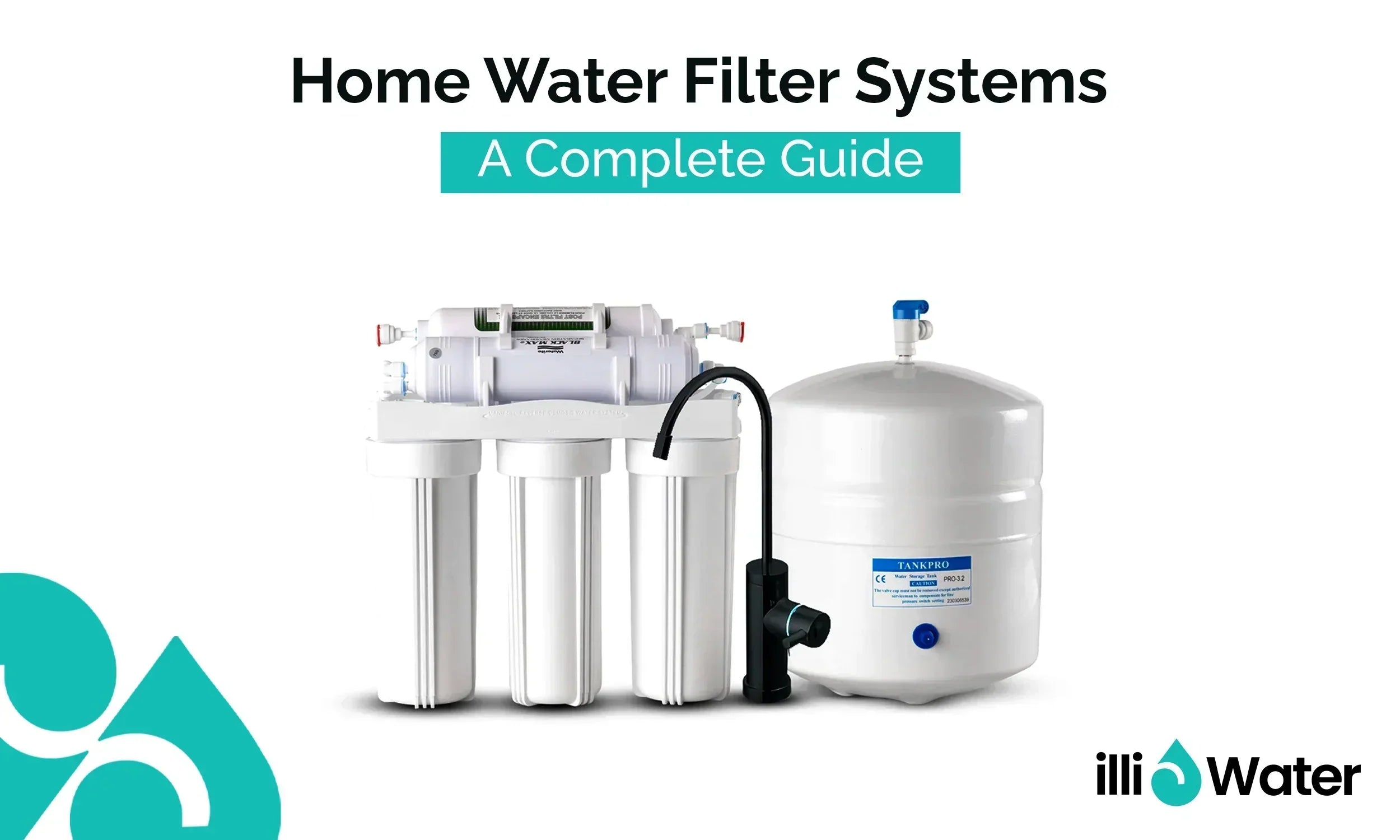
Home water filter systems remove contaminants from municipal water, providing homeowners with access to safe and clean water. These systems vary in terms of their installation mode and filtration technology.
With many options available in the market, choosing the right water purification system for your home can be quite overwhelming.
This guide helps you make an informed decision by breaking down how water filter systems work and highlighting their benefits. It also compares different filter types, outlining how Canadian homeowners and renters can choose the right system for their home or apartment.
What is a Water Filtration System?
A water filtration system is an appliance that eliminates harmful impurities such as lead, chlorine, sediment, and bacteria from the tap water. It improves water quality, making it safe and hygienic for drinking, cooking, cleaning, and other household chores.
How Does a Water Filter System Work?
Home filter water systems process water through one or multiple filtration stages that remove harmful impurities.
Water systems use carbon, UV, sediment, reverse osmosis (RO), and alkaline filters, separately or in combination, to remove a broad spectrum of impurities. As a result, you get pure and crisp water, safe for drinking and household use.
What Does a Home Water Filtration System Remove?
Water filtration systems for homes remove various harmful substances and chemicals commonly found in lake water and municipally treated water in Canada. Typically, these include:
-
Sediment, rust, dirt
-
Dissolved solids
-
Heavy metals like lead
-
Chemicals like chlorine
-
Unpleasant smells and tastes
-
Microorganisms such as viruses and bacteria
-
Hardness minerals such as magnesium and calcium
Advanced systems, such as reverse osmosis water filters, can also eliminate fluoride, PFAS (per- and polyfluoroalkyl substances), and other trace contaminants.
What are the Different Types of Water Filters?
Home water filter systems vary depending on the filters they use. Understanding the different types of water filters is important because they determine how effectively contaminants are removed and the quality of your home's water.

Reverse Osmosis (RO)
Reverse osmosis water filters for home have a semipermeable membrane with fine pores ranging in size from 0.0001 to 0.001 microns. RO filters remove up to 99% of contaminants, including dissolved solids, chlorine, fluoride, and heavy metals. The outcome is safer and cleaner water.
Most cutting-edge RO filters also function as BPA-free water filters, effectively eliminating bisphenol A (BPA) from the water. Based on Health Canada’s detailed assessment, BPAs are linked to potential neurodevelopmental and reproductive issues, particularly in infants and young children.
Carbon Filter
Carbon filters use activated carbon blocks with pore sizes (micron ratings) from 0.5 to 50 microns. They work well for chemical removal, removing 85% to over 99% of contaminants such as chlorine, pesticides, and volatile organic compounds (VOCs). This makes them a top choice as standalone chlorine removal water filters for improving the water’s taste and odor.
However, their micron rating affects their ability to remove suspended particles such as sediment. A filter with larger pores will let smaller particles pass through.
Moreover, carbon filters do not remove microorganisms or dissolved solids independently. For these reasons, they are frequently used as a first-stage pre-filter in multi-stage home filtration systems to protect the specialized filters.
Sediment Filter
Sediment filters remove suspended particles such as debris, dirt, rust, and sand from water. Their micron rating, ranging from 1 to 100 microns, determines their effectiveness. Although you can use them as point-of-use filters, it is best to add them as pre-filters to multi-stage drinking water filters for home, as they don’t filter microbes or chemicals.
UV Filter
UV water filters utilize ultraviolet light to neutralize up to 99.9% of microorganisms, viruses, and bacteria (without any chemicals), delivering microbiologically safe water. That said, they don’t purify heavy metals, dissolved solids, and sediments. It is best to pair them with RO home water filters to thoroughly treat water.
What Are the Benefits of Having a Home Water Filtration System?
Installing a filtered water system in your home provides you with a seamless flow of reliable and great-tasting water. It also reduces your dependence on bottled water, helps you save money, and protects your plumbing system.
Let’s walk you through the key benefits of installing a water purification system.

Healthier Water
Drinking water filter systems for home remove hazardous impurities, including heavy metals, chlorine, bacteria, and sediment, delivering pure water. Using hygienic water for cooking and drinking protects your family’s health by shielding them against waterborne diseases.
Improved Taste and Odour
Water filters get rid of organic compounds and chlorine that impart a foul odor and taste to the water. Better-tasting water improves daily hydration and makes meals and beverages more flavorful.
Protects Plumbing
Eliminating corrosive contaminants and sediment protects your appliances, faucets, pipes, and showers against limescale buildup and stubborn stains. As a result, appliances work more efficiently, and fixtures last longer.
Convenience
Water filter systems for home deliver a consistent supply of clean and healthy water right from the tap. You no longer need bottled water or refill pitchers.
Cost Savings Over Time
Filtered water lowers long-term costs by minimizing bottled water purchases and preventing appliance wear. This leads to significant savings over time.
Softer Skin and Shinier Hair
Clean water hydrates your skin and hair, making them softer and shinier, respectively. A 2021 review in the Journal of Cosmetic Dermatology suggests removing harsh minerals like calcium and chlorine from bathing water promotes shinier hair and softer, hydrated skin.
Eco-Friendly Water Filtration Solution
Home filter systems for drinking water reduce your reliance on bottled water. Gradually, your plastic consumption and carbon footprint reduce.
Which Filter Is Best for Drinking Water?
Different water filter systems eliminate distinct impurities. Comparing them allows you to determine the most reliable home water filter systems.
|
Feature |
Reverse Osmosis |
Carbon Filter |
Sediment Filter |
UV Filter |
|
Removes Heavy Metals |
Yes |
Limited amount |
No |
No |
|
Removes Chlorine & Bad Taste |
Yes |
Yes |
No |
No |
|
Removes Bacteria & Viruses |
Yes |
No |
No |
Yes |
|
Removes Dissolved Solids (TDS) |
Yes |
No |
No |
No |
|
Good For Drinking Water |
Excellent |
Moderate |
No |
Not bad |
Based on this comparison, reverse osmosis provides pure, healthy water filtration. They eliminate heavy metals, chemical impurities, and dissolved solids while improving the water’s taste, making it fit for daily hydration in Canadian homes.
What Should I Look for When Buying a Water Filter Home System?
To buy the best water filtration system for your home in Canada, first understand your household’s water consumption, water quality, and maintenance needs. The ideal system is certified and performs optimally across different water conditions.
Contaminants Present in Your Water
Begin by detecting the impurities in your water through a professional water assessment or a municipal report. The results help you determine whether you need heavy metal removal, chlorine elimination, dissolved solids filtration, or antibacterial protection.
Filtration Technology (RO, Carbon, UV, etc.)
Different filtration technologies combat different water challenges.
-
Carbon filters provide better-tasting water.
-
RO filtration units address dissolved metals and solids.
-
UV filters are best at eliminating bacteria and viruses.
This is why many Canadian homeowners opt for multi-stage filtration systems. They comprise multiple purification layers, with each stage tackling a specific concern.
NSF/ANSI Certifications
NSF/ANSI certifications validate that a home water filter meets specific safety and performance standards. To effectively target your water’s specific impurities, look for systems certified to relevant NSF/ANSI standards, such as 42, 53, 58, or 55.
Filter Lifespan and Replacement Cost
Analyze the average filter lifespan and maintenance cost of different water filter systems.
Typical filter lifespan:
-
Sediment and carbon filters last for 6 to 12 months.
-
RO membranes have a lifespan of 2 to 5 years.
-
UV filters function optimally for a year and need annual replacement.
Average annual filter replacement cost:
-
Carbon and sediment filters range from $40 to $100.
-
Standard home RO water filter systems range between $150 and $400.
-
UV filter replacement ranges from $80 to $150.
Evaluate replacement costs and service timelines to ensure you choose a system that aligns with your budget and routine.
Flow Rate and Water Pressure Compatibility
Choose a system compatible with your home’s water pressure and routine consumption. Low flow rate affects convenience in shared living spaces, busy households, and larger families.
Ideal flow rate of different systems:
-
Under-Sink Systems (Point-of-Use): Flow rate of 0.75 to 1.0 GPM (approx. 2.8–3.8 L/min) results in fast filling at a single tap.
-
Countertop Systems: Flow rate of 0.25 to 0.5 GPM (approx. 0.9–1.9 L/min) is ideal.
-
Whole-House Systems (Point-of-Entry): Require a higher flow rate of 4 to 12 GPM (15–45 L/min) to maintain consistent pressure.
Installation Type (Under Sink, Countertop, Whole House)
Home water filter systems come with different installation modes: under-sink, whole-house, and countertop are the common ones.
-
Countertop systems: Perfect if you’re a renter or have limited under-sink space in your kitchen.
-
Under-sink systems: Ideal if you have your own home, have sufficient under-sink space, and want a long-term system.
-
Whole house systems: Ideal if yours is a big and busy house, and you want a point-of-entry system that filters water at the main supply line.
Maintenance Requirements
Some water filter systems for home need periodic filter replacement, while others demand professional servicing. Opt for a system that suits your convenience level for ongoing care and maintenance.
Exploring the Best Water Filtration Systems in Canada
Given common water challenges in Canada, households need home water filter systems that perform reliably under varying conditions. From personal experience, the following water purification systems function optimally even with inconsistent water quality.
Illi Water Standard RO System
Illi Water’s Standard RO System is an advanced multi-stage water filter with under-sink installation. It uses multiple stages, including a sediment pre-filter, carbon block, RO membrane, UV filter, and alkaline filter to remove chlorine, sediment, fluoride, lead, and unwanted tastes. It is perfect for health-conscious families seeking ultra-pure water with a balanced pH and alkaline taste.
Pentair RO System
The Pentair RO system by illi Water is best known for its robust contamination reduction, sturdy construction, and a 3.2-gallon storage tank. It is a 4-stage system that uses sediment, carbon, and RO filters to eliminate sediment, chlorine, lead, odors, and harmful impurities. This system is ideal for Canadian households wanting a compact system with a smooth water supply at consistent pressure.
Illi Water Tankless RO System
The lli Water tankless RO system is a sleek, 5-stage water filter with a smart digital faucet. Its sediment pre-filter, carbon block, RO membrane, and alkaline filter work together to eliminate 99% of contaminants like chlorine, lead, and bad tastes. The faucet shows real-time water quality and sends filter reminders. It is the perfect modern system for families who want safe, great-tasting water without compromising their kitchen's aesthetic appeal.
How Long Does It Take to Install a Home Water Filtration System?
The installation time for a home water filter system depends entirely on the type of system and your house’s existing plumbing.
-
Countertop units take 30 minutes or less for complete installation.
-
Under-sink RO systems usually take 1 to 2 hours to set up.
-
Whole-house systems often require professional installation, which can take several hours if your house has a complex plumbing layout.
How Much Does It Cost to Install a Water Filtration System in Canada?
The installation cost of home water filter systems in Canada varies depending on installation requirements and system type. On average, the installation cost of the following filters is:
-
Basic under-sink RO filters: Between $150 and $300.
-
Tankless RO systems: Between $250 and $400.
-
Whole-house water filter system: Between $300 and $600.
Note: Actual installation costs can vary according to regional labor rates, modification requirements, and plumbing conditions.
Should Canadian Homeowners Really Consider Water Filtration Systems?
Homeowners in Canada should consider getting home water filter systems. While Canadian municipal water is generally safe, it often contains hardness minerals, chlorine, and bacteria. These impurities affect the water’s taste and safety. They also cause limescale that damages appliances and plumbing. Water filtration systems resolve these problems, providing safe and clean water year-round.
Enjoy Clean Drinking Water with Home Water Filter Systems
An investment in your family’s health is certainly an important one, like installing a water filter system for the home. It provides unlimited pure water for all needs. Make sure to select a system that suits your water profile, budget and filtration needs.
FAQs
What TDS level indicates I need a water filter?
If the water’s TDS (total dissolved solids) level is above 300 ppm, you need a home water filter system.
What micron rating is best for a home water filter?
A micron rating ranging between 0.5 and 5 microns is optimal for most water filtration home systems.
Do water filters remove PFAS?
Yes, many advanced carbon and RO filters can remove PFAS if they are comprehensively certified.
Are water filtration systems hard to maintain?
No, they are not. Typically, water filtration systems for homes demand filter replacements every 6 to 12 months.
What are the disadvantages of a water filtration system in the home?
The initial cost of buying and installing a water filtration system is hefty. Secondly, maintaining the system periodically may seem daunting to many homeowners.
What do NSF ANSI certifications really mean for water filters?
NSF ANSI certifications show that a water filter system has been independently verified and complies with certain contaminant reduction standards.
Can a water filtration system fix hard water issues?
Advanced water filtration systems generally eliminate hardness minerals such as calcium and magnesium. However, it is best to confirm this before getting a system. A water softener is a more appropriate solution for hard water issues.
What causes a metallic taste in filtered water?
Your filtered water may have a metallic taste if your home’s plumbing is old, your system has insufficient filtration stages, or if the water has a high iron content.
Why is the water flow so slow after installing a water filter?
If your water system has clogged filters, a dysfunctional membrane, or low pressure, the water flow can be low.


